
How to Start an
Auto Transport Brokerage
Starting an auto transport brokerage is one of the lowest-overhead ways into freight: no trucks, no warehouse, just authority, a bond, and a way to connect customers with carriers. This guide walks the full path, from your MC number to your first booked load, and what it actually costs to get there.
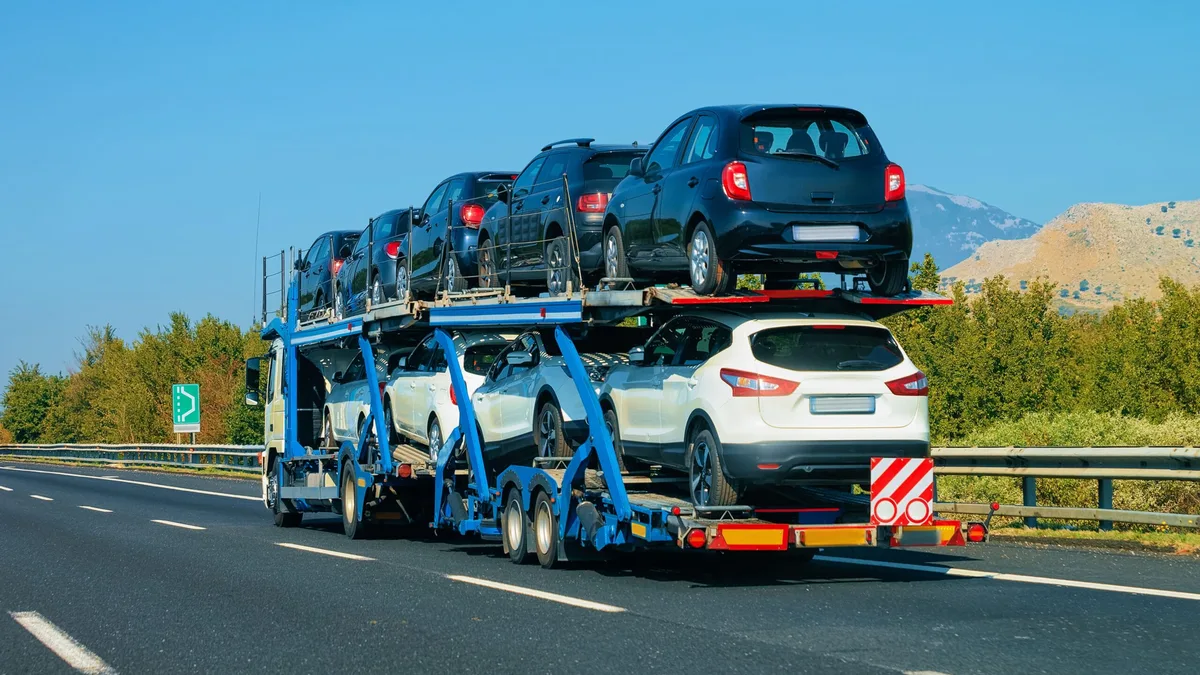
License, bond, loadboard, software, then sell
To start an auto transport brokerage you need four things in place and one skill to build. The four things: a registered business, active FMCSA broker authority (your MC number), a $75,000 surety bond, and the tools to find carriers and run your loads. The skill is selling, turning leads into booked, dispatched, paid loads.
The paperwork is the easy part, and it's cheaper than most people think. What separates brokerages that grow from ones that stall is the operation you build on top of it: how fast you quote, how reliably you cover loads, and whether you can see your margin.
Here's the full path, in order.
From decision to your first dispatched load
Work these in order. The first four get you legal, the last three get you operating, and you can set up steps five and six while your authority is still in its vetting period.
Decide what kind of brokerage you're building
You don't have to broker everything on day one. Most successful new brokers pick a lane, a vehicle type, or a customer segment they understand, and get good at it before they widen out. This is a home-based, low-overhead business to start, so the real question isn't office space, it's where your first loads will come from.
- Pick a focus: a region, dealer trades, snowbird routes, or classic/exotic cars
- Decide who your first customers are: individuals, dealers, or other brokers
- You can run it from home with a laptop, a phone, and the right software
Register your business
Before you can get federal authority you need a legal business. Most brokers form an LLC for liability protection, get an EIN from the IRS, and open a business bank account so customer and carrier money never runs through a personal account. This part is cheap and fast compared to what comes next.
- Form an LLC (or corporation) in your state and get an EIN from the IRS
- Open a dedicated business checking account for deposits and carrier pay
- Costs vary by state, roughly $50–$500, sometimes with an annual fee
Get your FMCSA broker authority (MC number)
To legally arrange auto transport for a fee, you register as a broker of property with the FMCSA. You file Form OP-1 through the Unified Registration System, which assigns your USDOT number and your MC (motor carrier) number as a broker. This is what makes you a real, licensed broker rather than someone quoting loads on the side.
- File Form OP-1 (broker of property) with the FMCSA
- You'll receive a USDOT number and an MC number tied to broker authority
- There's a one-time application fee (about $300) and a vetting period of a few weeks
Post your surety bond and file your BOC-3
Federal law requires every property broker to carry a $75,000 surety bond (form BMC-84) or an equivalent trust fund (BMC-85). You also file a BOC-3, which names a process agent in every state so you can legally be served there. Your authority doesn't activate until both are on file, so line these up early.
- Buy a $75,000 BMC-84 surety bond; you pay an annual premium, not the full amount
- The premium depends on your credit, commonly a few hundred to a couple thousand a year
- File a BOC-3 blanket process-agent form and register for UCR each year
Get on the loadboards
Loadboards are how you reach carriers. Central Dispatch has the largest network, and Super Dispatch pairs a loadboard with a clean carrier workflow. Most brokers end up using both. Set up your accounts now so that the day your authority activates, you can already post a load and find a truck.
- Set up Central Dispatch and Super Dispatch accounts
- Learn how carriers read a posting: accurate rate, dates, and vehicle details win callbacks
- Verify a carrier's authority and insurance before you ever dispatch to them
Set up the software that runs the business
Authority and a loadboard let you dispatch a load. They don't run a brokerage. The moment you have more than a couple of orders, you need one place that captures leads, quotes from lane pricing, posts to the boards, and tracks who owes what. Starting on a real platform means you never have to migrate off a spreadsheet later.
- Capture every lead in one inbox so none go cold before you quote
- Quote fast and consistently, then dispatch to both boards from one screen
- Track customer deposits, balances, and carrier pay against each order
Get your first leads and book your first load
Now you sell. Your first customers come from lead providers, referrals, dealers, and your own marketing, and the broker who quotes first and follows up usually wins the booking. Price each load so it wins the customer and still pays the carrier, dispatch it, collect your deposit, and you've run your first real load end to end.
- Start with one or two lead sources and track ROI before you scale spend
- Quote quickly, follow up, and set a margin floor you won't drop below
- Deliver clean, on-time first loads: reviews and repeat customers compound
The real startup cost, line by line
There are no trucks to buy, so the startup cost is mostly filings, a bond premium, and your monthly tools. These are typical 2026 ranges to plan around, not quotes, so confirm current fees with the FMCSA and your state before you file.
| Item | Typical cost | Notes |
|---|---|---|
| Business registration (LLC + EIN) | $50–$500 one-time | Varies by state; some states add an annual filing fee. |
| FMCSA broker authority (Form OP-1) | ~$300 one-time | Registers your USDOT + MC number as a broker of property. |
| Surety bond (BMC-84, $75,000) | ~$900–$2,000+/year | You pay an annual premium, not $75k. Rate depends on your credit. |
| BOC-3 process agent filing | ~$50 one-time | Blanket process-agent coverage in every state; required for authority. |
| UCR registration | ~$40–$150/year | Brokers pay the lowest fee bracket; renewed annually. |
| Loadboard subscription | ~$50–$150/month | Central Dispatch and/or Super Dispatch to reach carriers. |
| Brokerage software | Monthly subscription | Runs leads, quoting, dispatch, payments, and reporting in one place. |
| Lead sources & marketing | Variable | Pay-per-lead, ads, referrals, or your own outreach. |
Add it up and most brokers are fully licensed and running for a few hundred dollars in one-time fees plus a modest monthly stack. The money that actually decides your first year isn't setup, it's what you spend on leads and how well you convert them.
Getting licensed is the start line, not the business
Plenty of people get their authority and never book steady loads. The ones who grow treat the brokerage like an operation from day one: every lead captured, every quote fast and consistent, every load dispatched and reconciled. Do that on spreadsheets and it works until it doesn't, usually right when you get busy enough for it to matter.
Starting on a real platform means the workflow scales with you. Carlink captures leads, quotes from lane pricing, posts to Central Dispatch and Super Dispatch from one screen, and keeps customer and carrier money on the same order, so you never have to rebuild your business off a spreadsheet later.
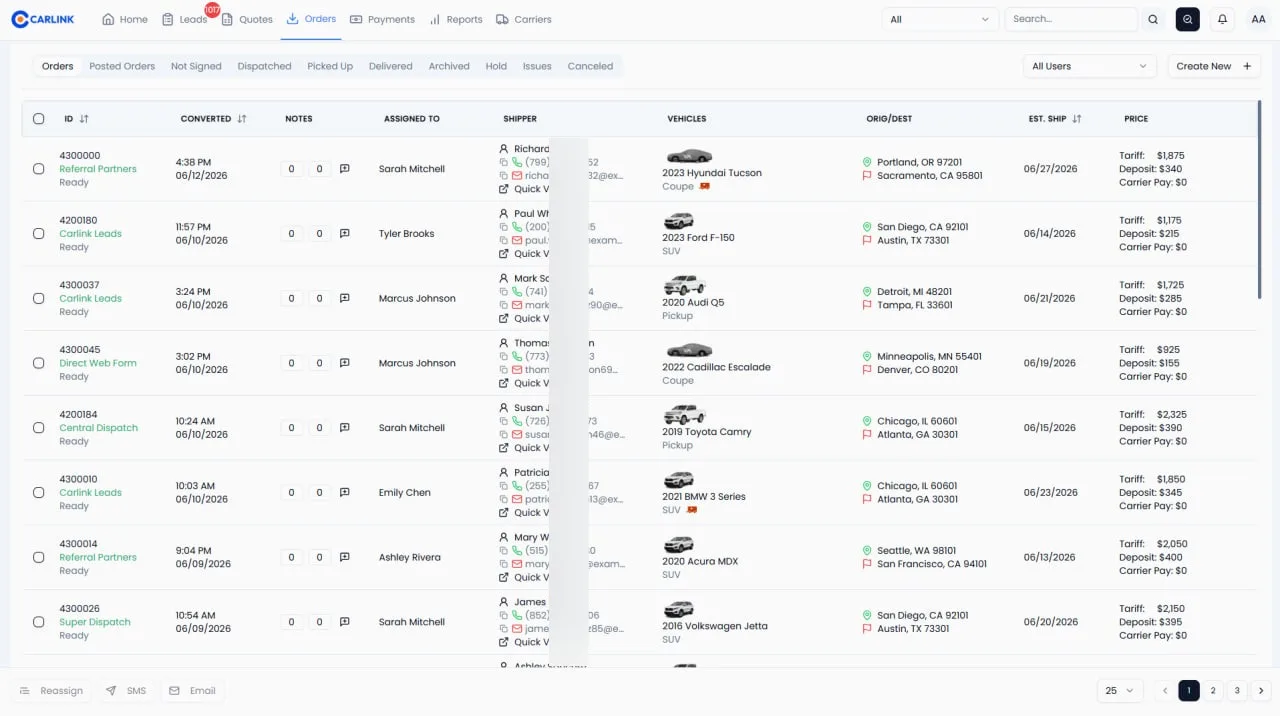
New brokers underestimate two things: how fast leads go cold, and how quietly margin leaks between disconnected tools. Read why spreadsheets bleed money at every step , how to price loads without giving away margin, and how to vet carriers before you dispatch to them, before you build habits you'll have to unlearn.
The four things your setup has to do on day one
You don't need every feature to start, but you do need these four working together, because they're where new brokers lose loads and margin first.
- Capture every lead in one place — so the first quote goes out before the customer books someone else.Lead Management →
- Quote fast and consistently — priced from lane data, not guesses, so you win the load and still pay the carrier.Pricing Automation →
- Dispatch to both boards from one screen — post to Central Dispatch and Super Dispatch without entering the load twice.Dispatch →
- Track customer and carrier money together — deposits, balances, and carrier COD on the same order, so margin doesn't slip.Invoicing →
Frequently asked questions
This guide is general information for new brokers, not legal or financial advice. Licensing requirements, fees, and bond rules are set by the FMCSA and your state and can change, always confirm the current rules with the FMCSA before you file.
Start on the platform you won't outgrow
Once your authority is active, Carlink runs the rest, leads, quotes, dispatch to both loadboards, payments, and margin from one record, built specifically for auto transport brokers. Book a demo and see the whole workflow before your first load.
More from the Carlink blog
What Is an Auto Transport Broker? (And How They Actually Make Money)
A plain-English guide to what an auto transport broker is, how brokers differ from carriers, how they make money on the margin between customer and carrier, and what it takes to operate one legally.
How Much Do Auto Transport Brokers Make?
What auto transport brokers really earn: broker income is margin per load times loads booked, minus cost. Real per-load margins, monthly income scenarios from solo broker to growing brokerage, and the levers that decide your take-home.
Best Auto Transport Software for Brokers (2026 Buyer's Guide)
Choosing auto transport software? A practical buyer's guide: loadboard vs CRM vs an all-in-one brokerage platform, the six must-have features to look for, how to run a demo that tells the truth, and what it should cost.