
Central Dispatch
vs Super Dispatch
They're the two biggest loadboards in auto transport, and most brokers eventually ask which one to use. The honest answer is that they're built for different things, and the brokers who cover loads fastest usually run both. Here's how they compare, and how to use them together without doubling your work.
One is built for reach, the other for workflow
Central Dispatch is the original auto transport loadboard. Its advantage is size: it has the largest carrier network in North America, so when you post a load, you're putting it in front of the most carriers possible. If a truck runs a lane, the driver is almost certainly checking Central Dispatch for freight on it.
Super Dispatch came later and took a different angle. It's a full transportation management system with its own loadboard built in, plus a carrier mobile app that handles digital bills of lading, photo inspections, and electronic proof of delivery. Carriers tend to like the experience, and the documents stay clean end to end.
So the real question usually isn't which board is better. It's whether you need maximum reach, a smoother workflow, or, as is most often the case, both at once.
Central Dispatch vs Super Dispatch, line by line
Both boards cover the same job, getting a carrier on your load, but they get there differently. Here's where each one pulls ahead.
| Dimension | Central Dispatch | Super Dispatch |
|---|---|---|
| What it is | The original auto transport loadboard and carrier marketplace. | A modern transport management system with a built-in loadboard. |
| Carrier network | The largest in North America. Most carriers check it first. | Large and growing, strongest with tech-forward carriers. |
| Best known for | Reach. If a carrier runs a lane, odds are they're on it. | Workflow. Digital BOL, photo inspections, and a polished driver app. |
| Carrier mobile app | Functional and loadboard-first. | Best-in-class, with electronic proof of delivery and inspections. |
| Pricing | Paid subscription for brokers and carriers. | Free loadboard tier for carriers, paid plans for the TMS. |
| Owned by | Cox Automotive. | Independent, built in Kansas City. |
| Best for | Maximum carrier coverage on every lane you run. | Brokers who want a clean, modern dispatch workflow. |
Notice that almost none of these rows are head-to-head losses. They're trade-offs. Central Dispatch wins on reach, Super Dispatch wins on workflow, and neither one runs the rest of your brokerage, the leads, quotes, payments, and margin, for you.
The brokers who cover loads fastest don't choose
Picking one board to save a subscription fee is a false economy. A load that sits uncovered for two extra days costs you far more than a second board ever will, in carrier pay bumps, customer frustration, and orders that quietly cancel. The point of a loadboard is coverage, and the most coverage comes from posting to both networks at once.
The catch has always been the double work. Running two boards separately means entering the same load twice, watching two inboxes, and stitching the booking back together by hand. That's the problem Carlink solves: post an order to Central Dispatch, Super Dispatch, or both from one screen, and the dispatch comes back into a single record.
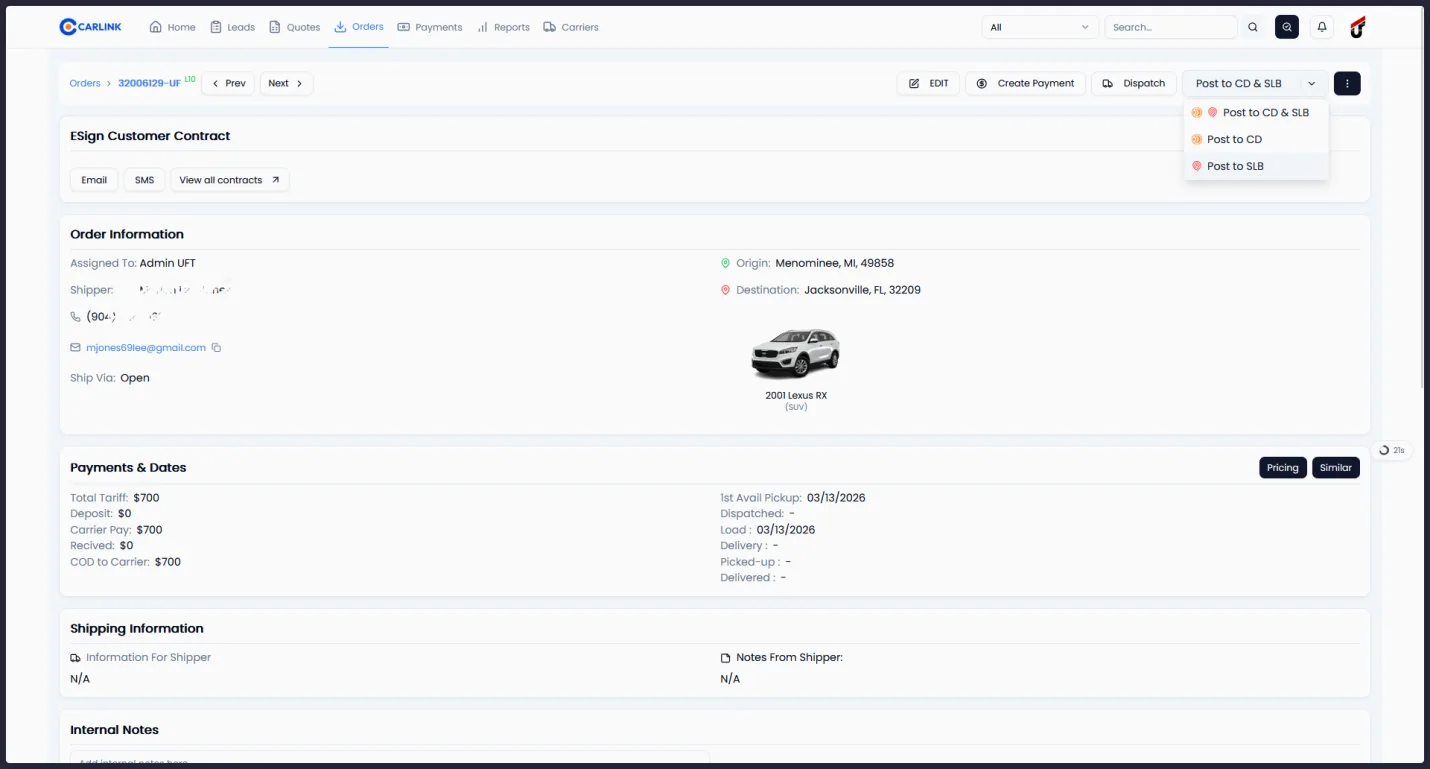
Carlink is an official Super Dispatch partner and connects to Central Dispatch as well, so you get the reach of both networks without two systems to manage. See exactly how the Super Dispatch integration works , or read how Carlink handles dispatch end to end.
How to run both boards without doubling the work
Using two loadboards should mean more coverage, not more clicks. Four moves keep it that way.
Post to both boards, not one
01The fastest way to cover a load is to put it in front of the most carriers, and that means posting to Central Dispatch and Super Dispatch at the same time. The trick is doing it without entering the order twice. Post once, reach both networks, and let the first willing carrier take it.
- Central Dispatch gives you the widest reach on common lanes
- Super Dispatch reaches the carriers who live in the app
- Posting to both covers more lanes without raising your carrier pay
Keep one system of record
02Two loadboards become a mess the moment your order status lives in three different tabs. Whichever board books the load, the order, the documents, and the carrier details should land back in one place so nothing falls through the gap between platforms.
- One order record, no matter which board covered it
- Carrier dispatch sheets and BOLs attached automatically
- No re-keying the same load into a second system
Price the load before you post it
03A loadboard only covers a load if the carrier pay is right. Neither board fixes a number that's too low, the car just sits. Set carrier pay from your lane history first, then post, so the load moves on the first try instead of aging on both boards.
- Carrier pay set from real lane data, not a guess
- A correctly priced load covers fast on either board
- Fewer reposts and rate bumps eating your margin
Track which board actually covers you
04Paying for two boards only makes sense if you know what each one returns. Track which board covers which lanes, and at what carrier pay, so you can see where each subscription earns its keep instead of guessing.
- See cover rate and carrier pay by board and by lane
- Spot the lanes where one board consistently wins
- Justify every subscription with numbers, not habit
A loadboard only covers one step of the job
Whichever board you choose, remember what it does and doesn't do. Central Dispatch and Super Dispatch both solve the dispatch step, finding a carrier for a load you've already sold. They don't touch the parts of the business where most brokers actually lose money:
- Capturing and routing leads before a competitor quotes them first
- Quoting fast from lane history so you win the booking and still pay the carrier
- Tracking customer payments, deposits, and carrier COD in one ledger
- Paying agents the right commission without a manual spreadsheet
- Seeing margin by lane, agent, and lead source so you know what's working
That's the whole pipeline, from first lead to final payment, and it's the part a loadboard was never meant to run. If that side of your brokerage still lives in spreadsheets, it's worth reading why spreadsheets quietly bleed money at every step , and how the broker margin you work so hard to win actually survives to the bank.
Frequently asked questions
Use both boards from one place
Carlink posts your loads to Central Dispatch and Super Dispatch from a single order screen, brings the dispatch back into one record, and runs everything else, leads, quotes, payments, and margin, around it. Migration takes a day, and we handle it.
More from the Carlink blog
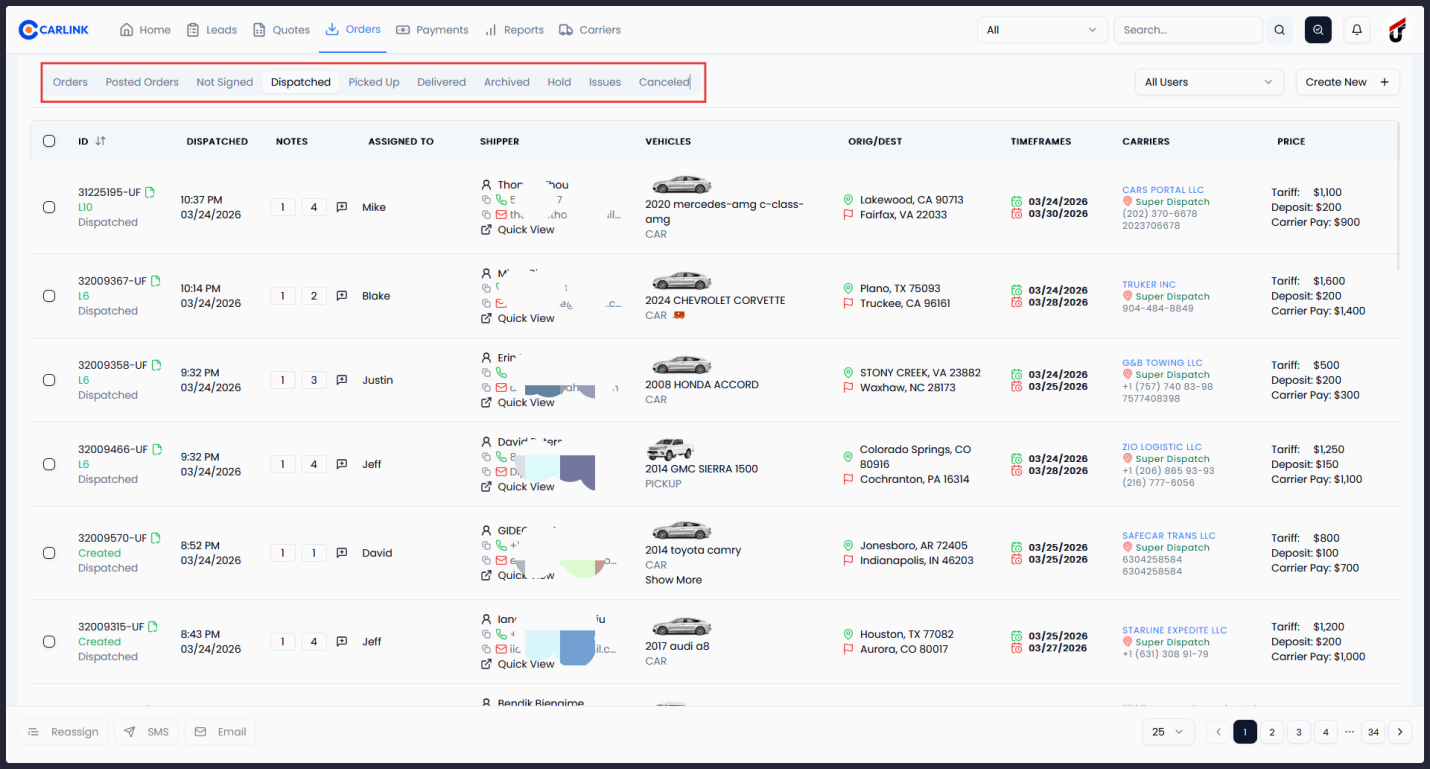
Carlink + Super Dispatch Integration
Manage your entire Super Dispatch workflow from within Carlink. Post to loadboards, dispatch to carriers, track orders in real time, and access documents - all without switching platforms.
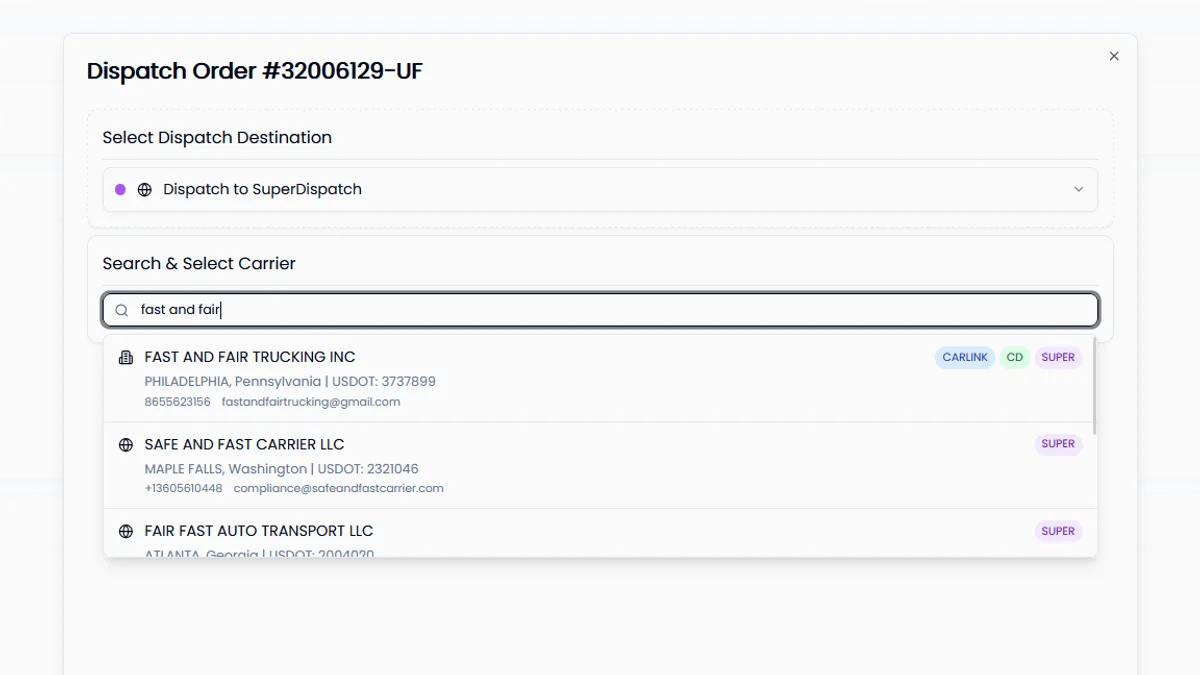
How to Vet Auto Transport Carriers (And Avoid Double Brokering & Fraud)
A broker's carrier vetting checklist: verify USDOT and MC authority on FMCSA SAFER, confirm cargo insurance the right way, check safety records, and spot the red flags of double brokering and carrier identity theft before you dispatch.
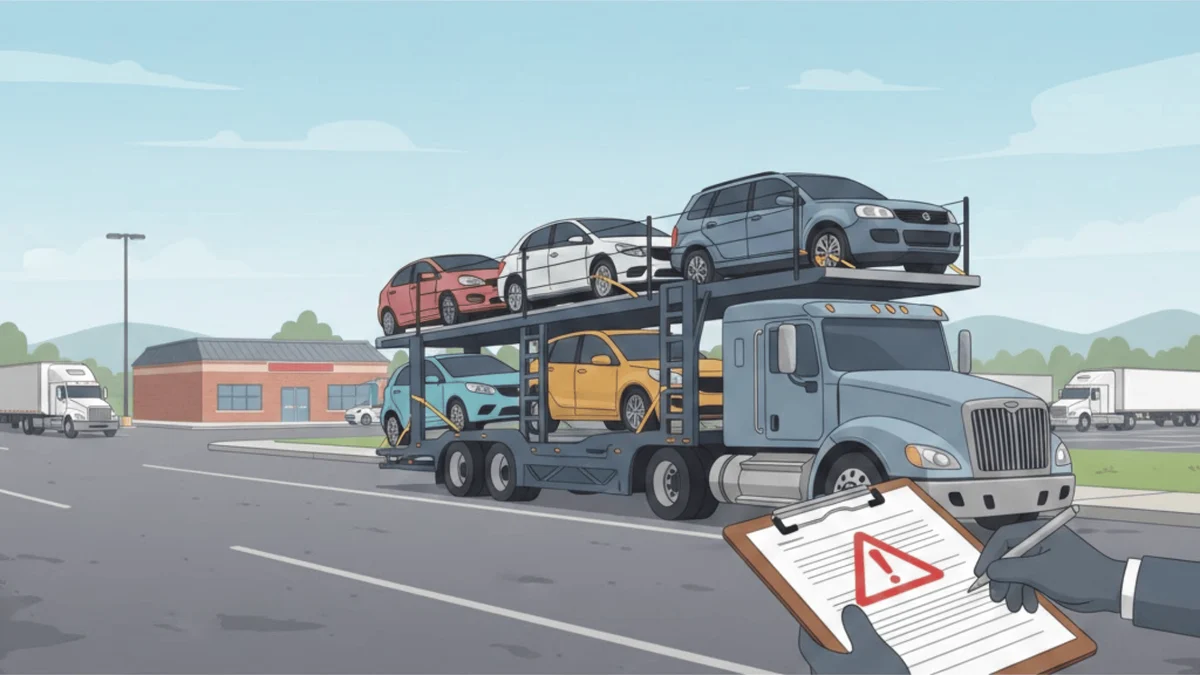
Best Auto Transport Software for Brokers (2026 Buyer's Guide)
Choosing auto transport software? A practical buyer's guide: loadboard vs CRM vs an all-in-one brokerage platform, the six must-have features to look for, how to run a demo that tells the truth, and what it should cost.