
Best Auto Transport
Software for Brokers
Search "best auto transport software" and you'll get a wall of feature lists that all sound the same. This guide skips the hype. It walks through the three kinds of tools brokers actually use, the must-have checklist to judge any of them by, and how to run a demo that tells you the truth before you commit.

The best software runs the whole brokerage, not one step
Most brokers shop for software to fix the step that hurts most today, a slow quote, an uncovered load, a missed payment. Then they end up with three tools that don't talk to each other and a spreadsheet holding it all together.
The software worth paying for is the one that runs the entire pipeline: a lead comes in, you quote it, you dispatch it to a carrier, you collect payment, and you can see the margin, all from one record. That's the lens this guide uses to compare your options.
So before the feature lists, the real question is which kind of tool you're actually buying.
Loadboard, generic CRM, or a platform built for brokers
Almost every "auto transport software" falls into one of three buckets. They solve very different problems, and knowing which you're looking at saves you from buying the wrong thing.
| Dimension | Loadboard | Generic CRM | Broker platform |
|---|---|---|---|
| What it is | A marketplace where you post loads and carriers find freight. | A generic sales pipeline you bend to fit auto transport. | An operating system built for the whole brokerage. |
| Lead capture & quoting | None. It starts after you've already sold the load. | Basic. Quoting is manual and not tuned to lane pricing. | Built in. Leads route in and quotes price from lane history. |
| Dispatch to carriers | Strong, but only on its own network. | None. You leave the CRM to post on a separate board. | Posts to Central Dispatch and Super Dispatch from one screen. |
| Payments & margin | Not its job. | Rarely native; usually a separate accounting tool. | Customer and carrier money tracked in one ledger. |
| Built for auto transport | Yes, for the dispatch step only. | No. Generic CRMs don't know what a lane or a COD is. | Yes, end to end, from first lead to final payment. |
| Best for | Finding a carrier for a load you've already booked. | Teams that mostly need contact management. | Brokers who want to run the entire business in one place. |
A loadboard and a CRM each do part of the job well. The reason brokers consolidate onto a platform is simple: every handoff between disconnected tools is a place where a lead, a payment, or a margin point quietly leaks out.
Six things the best auto transport software must do
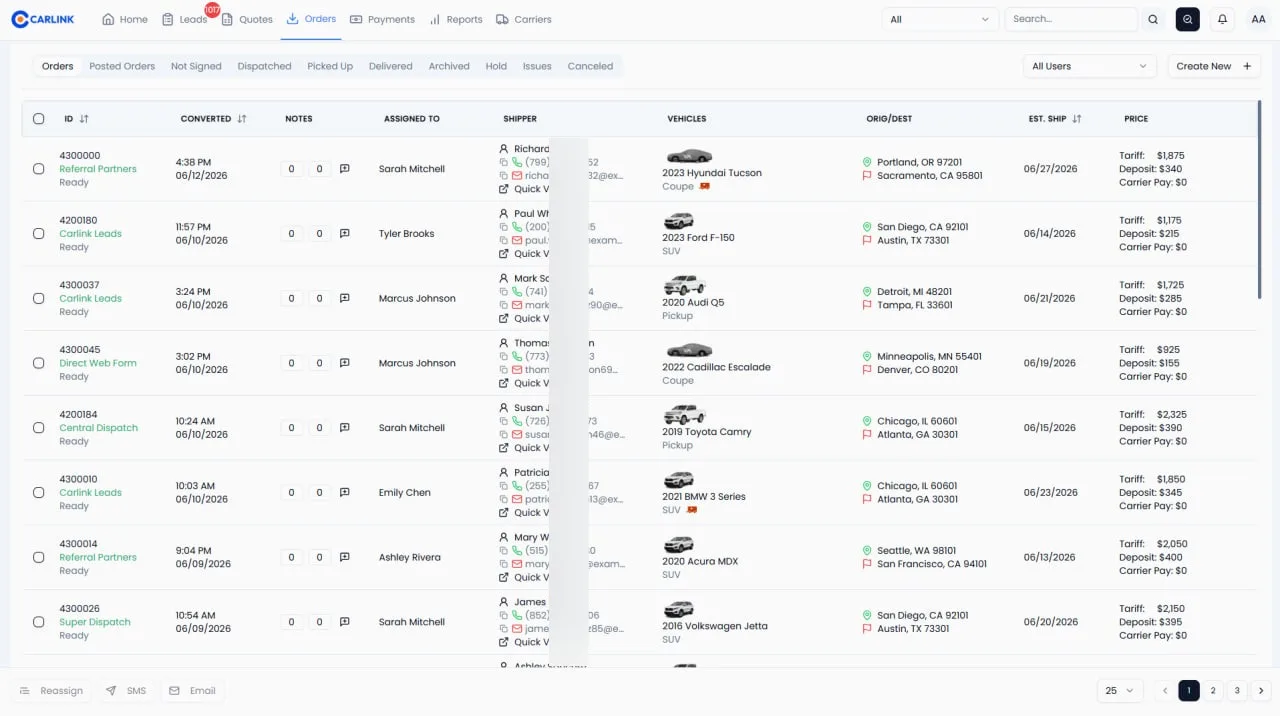
Judge any tool against these six. Each one maps to a place brokers commonly lose money, and to a part of how Carlink is built.
Lead capture from every source, in one inbox
The first broker to quote usually wins. If leads land in five different places, you lose the ones you never see in time.
How Carlink handles lead managementInstant, accurate quoting from lane history
A quote has to win the customer and still pay the carrier. Pricing from real lane data beats guessing, and it beats a number that's too low to cover.
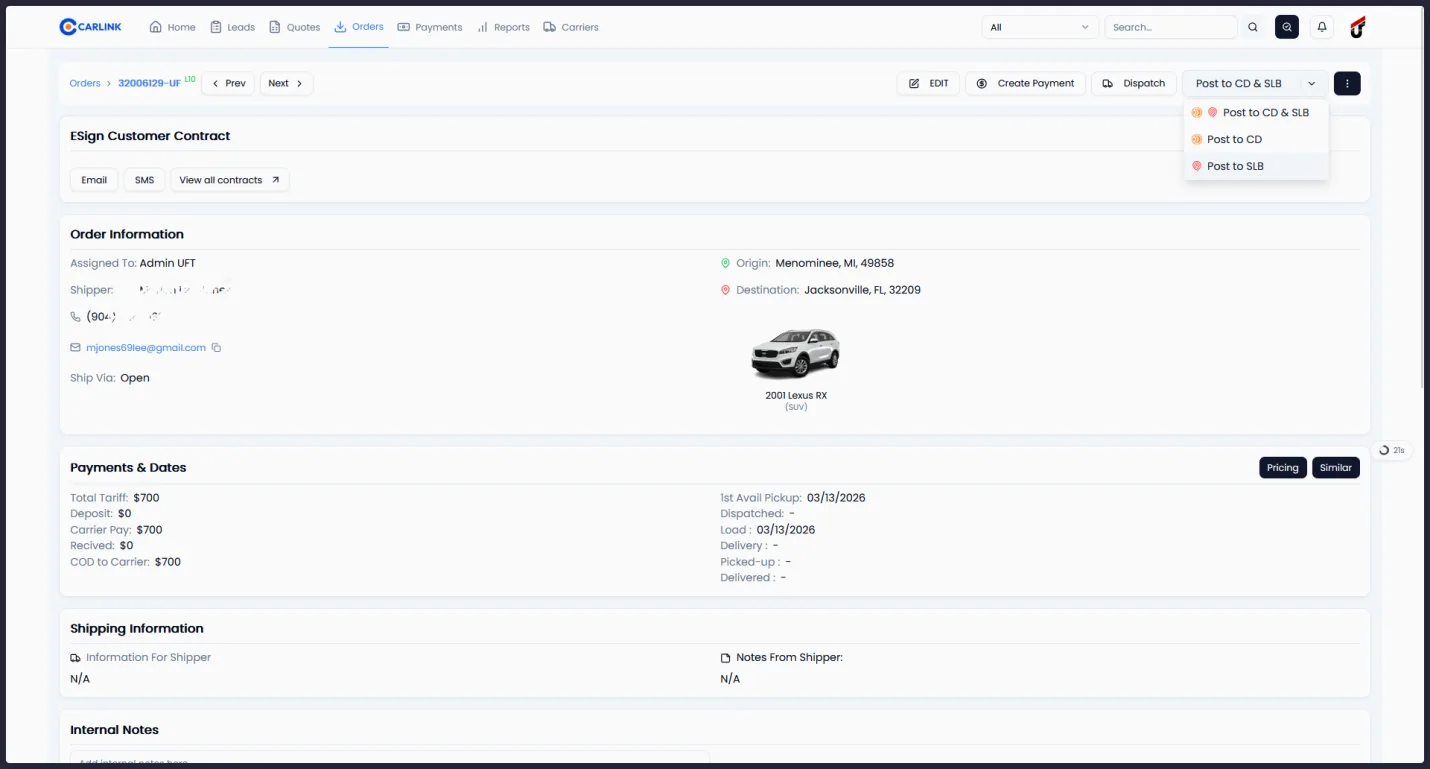
How Carlink handles pricing automationPost to Central Dispatch and Super Dispatch from one screen
Coverage comes from reach. Posting to both boards without entering the load twice covers more lanes without raising carrier pay.
How Carlink handles dispatchCustomer and carrier payments in one ledger
Deposits, balances, and carrier COD scattered across tabs is how money goes missing. One ledger is how margin survives to the bank.
How Carlink handles invoicingMargin reporting by lane, agent, and lead source
You can't grow what you can't measure. Knowing which lanes and lead sources actually make money is the difference between scaling and guessing.
How Carlink handles reportsBuilt specifically for auto transport
A generic CRM doesn't know what a lane, a dispatch sheet, or a COD is. Software built for the industry fits your workflow instead of fighting it.
How Carlink handles lead managementThe hidden cost is the gap between tools
On paper, stitching a loadboard, a CRM, and a spreadsheet together looks cheaper than one platform. In practice, the cost isn't the subscriptions, it's the gaps between them. A lead that never makes it into the pipeline. A quote that takes too long because the lane history lives somewhere else. A carrier payment nobody reconciled. None of it shows up on an invoice, which is exactly why it's so easy to ignore.
An all-in-one platform closes those gaps by keeping one record from the first lead to the final payment. Carlink is built that way, and it still connects out to the loadboards for the one thing they do best, reaching carriers.
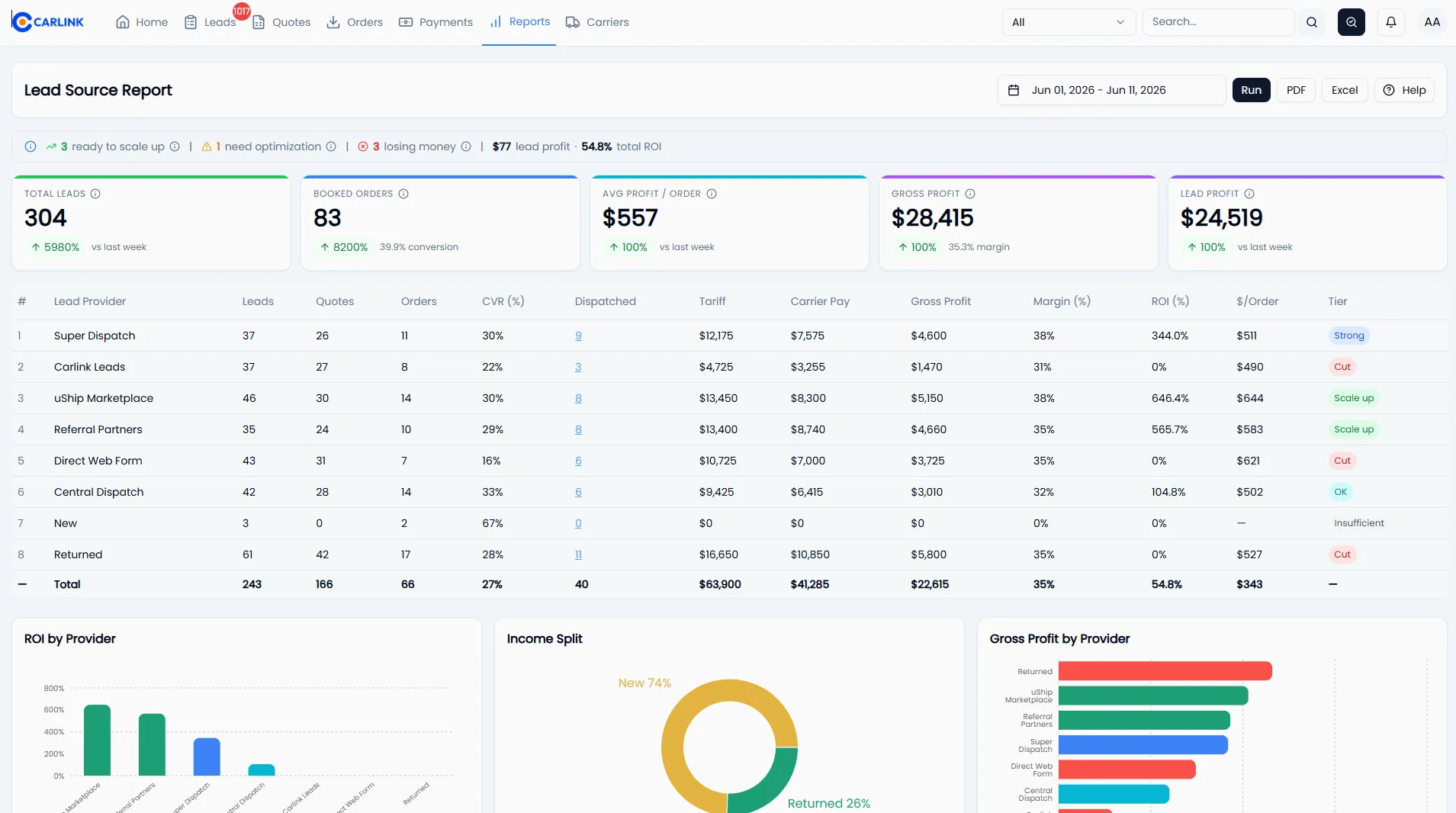
If your brokerage still runs on spreadsheets, start there, it's usually the biggest leak. Read why spreadsheets quietly bleed money at every step , and if you're weighing the boards themselves, see our Central Dispatch vs Super Dispatch comparison.
How to run a demo that tells you the truth
A feature list can claim anything. These four moves cut through it so you buy on how the software actually runs your day.
Map your whole pipeline before you shop
01Write down every step from the moment a lead arrives to the day the carrier is paid. Most brokers discover the leak isn't dispatch, it's the leads that go cold and the quotes that take too long. Buy software for the whole pipeline, not just the step that hurts today.
- List every tool a load touches: lead form, spreadsheet, board, accounting
- Count how many times the same load gets re-entered by hand
- The platform that removes the most re-keying usually wins
Test the quote-to-dispatch flow in the demo
02Don't watch a slideshow, run a real load. Ask to take a lead in, quote it, and dispatch it to a carrier while you watch. If quoting is fast and the dispatch posts to both boards without retyping, that's the daily job done right.
- Time how long it takes to go from new lead to sent quote
- Confirm one order posts to Central Dispatch and Super Dispatch
- Check that the booking flows back into the same record
Check the money side, not just the workflow
03Pretty dispatch screens don't pay the bills. Make sure customer deposits, balances, carrier COD, and agent commissions all live in the same system, so your margin isn't reconstructed from memory at the end of the month.
- Customer and carrier payments tracked against the order
- Agent commissions calculated without a side spreadsheet
- Invoices and receipts that don't need a second tool
Demand reporting you'd actually act on
04The best software tells you where the money is. Ask to see margin by lane, by agent, and by lead source on live data. If you can't answer "which lead source is most profitable" in one click, the reporting isn't real.
- Margin broken down by lane, agent, and lead source
- Cover rate and carrier pay you can compare over time
- Numbers you trust enough to change how you spend
Software is the lever, the business is still yours
The right platform won't find your leads or set your margin for you. What it does is make the work you already do faster and harder to lose money on:
- Quote first, because the lead is in front of you before it goes cold
- Cover loads faster by posting to both boards from one screen
- Keep deposits, balances, and carrier COD from slipping through gaps
- Pay agents the right commission without rebuilding it by hand
- See margin by lane, agent, and lead source, so you scale what works
New to the model and want the fundamentals first? Start with what an auto transport broker actually does and how the leads you pay for turn into booked, profitable loads.
Frequently asked questions
See the whole brokerage in one place
Carlink runs leads, quotes, dispatch to both loadboards, payments, and margin from one record, built specifically for auto transport brokers. Book a demo and run one of your real loads through it. Migration takes a day, and we handle it.
More from the Carlink blog
Why Spreadsheets Are Killing Your Auto Transport Brokerage
Excel and Google Sheets feel free — but they quietly leak money at every step of a brokerage: lost leads, slow quotes, double-bookings, missed carrier payments, and decisions made on stale data. Here's the real cost, and when to switch.
Central Dispatch vs Super Dispatch: Which Loadboard Should You Use?
Central Dispatch has the reach, Super Dispatch has the workflow. A side-by-side comparison for auto transport brokers — carrier network, pricing, dispatch flow, and why most brokerages end up running both from one place.
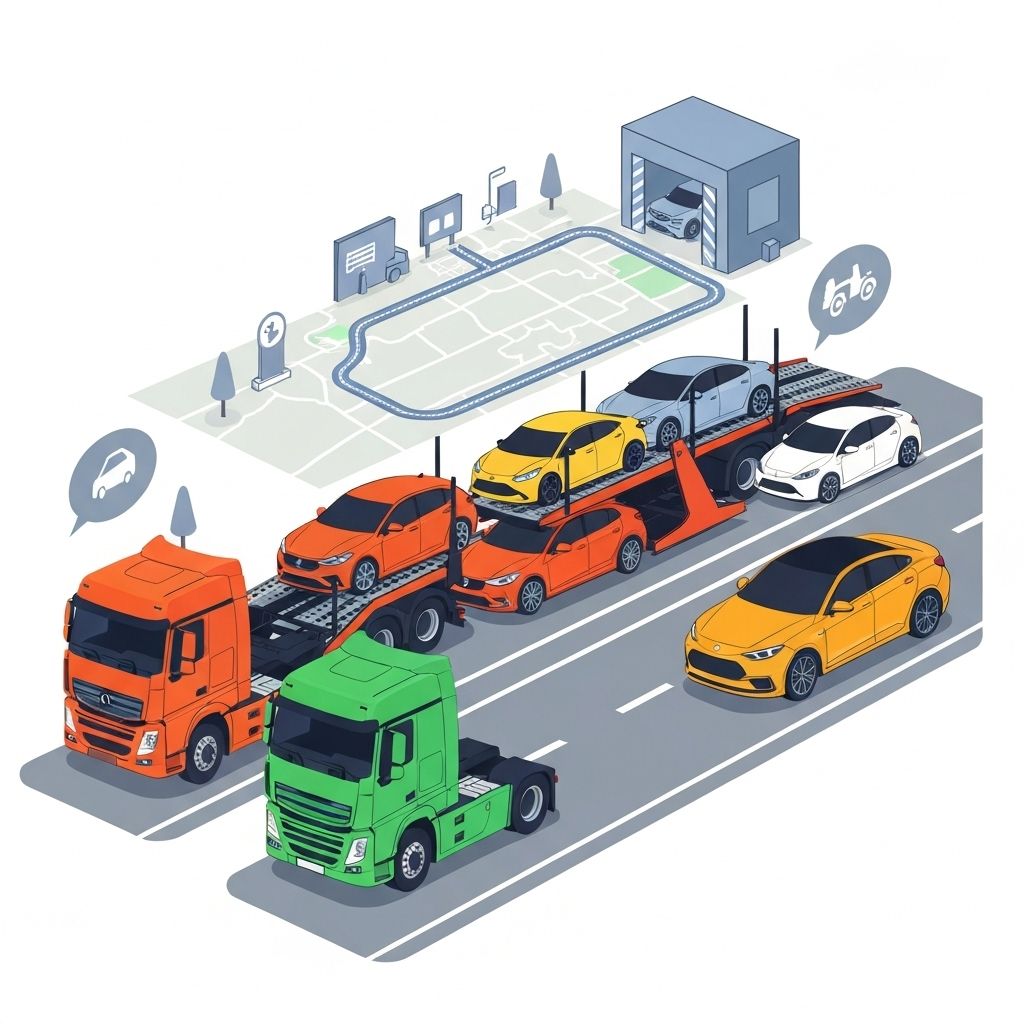
What Is an Auto Transport Broker? (And How They Actually Make Money)
A plain-English guide to what an auto transport broker is, how brokers differ from carriers, how they make money on the margin between customer and carrier, and what it takes to operate one legally.