
Why spreadsheets are killing
your brokerage
Excel and Google Sheets feel free. But for an auto-transport brokerage, they quietly leak money at every step — lost leads, slow quotes, double-bookings, missed carrier payments, and decisions made on stale data. Here's the real cost, and when it's time to move on.
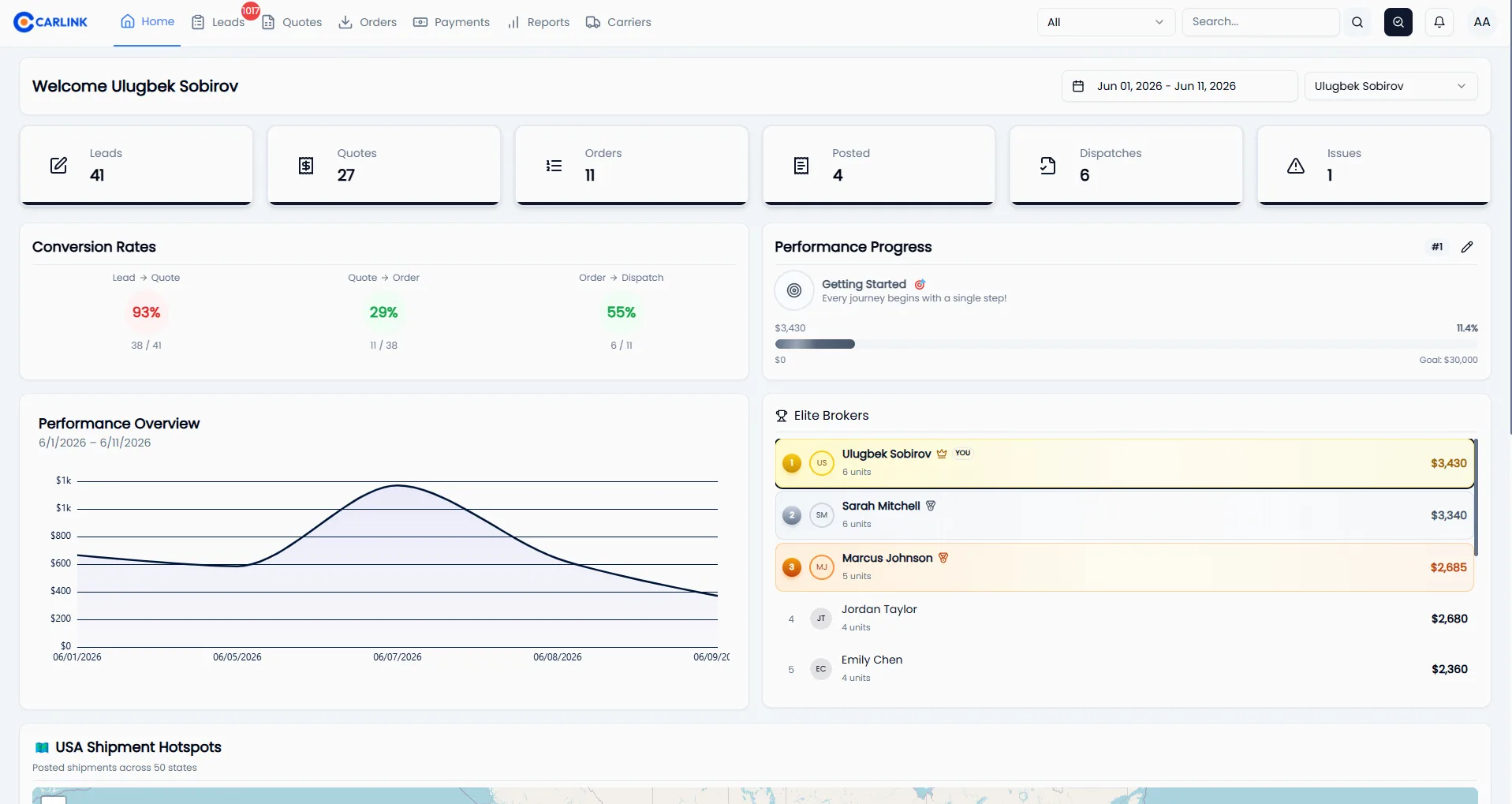
Every brokerage starts here
And that's fine. When it's just you and a handful of loads a month, a spreadsheet is the right tool. It's fast, flexible, and free.
The problem isn't the spreadsheet. It's what happens when you grow. You add an agent, then another. Lead spend climbs. You're posting to loadboards, chasing carriers, charging cards, paying commissions. The spreadsheet that ran your one-person shop is now the single point of failure for a team — and it has no idea what's actually going on in your business.
A spreadsheet stores data. A brokerage needs a system that acts on it — routes the lead, sends the quote, blocks the double-booking, queues the carrier ACH, and tells you which lead source actually makes money. That's the gap, and it gets more expensive every month you ignore it.
Where spreadsheets leak money
Six places it happens in a brokerage — and what a purpose-built platform does instead.
Leads
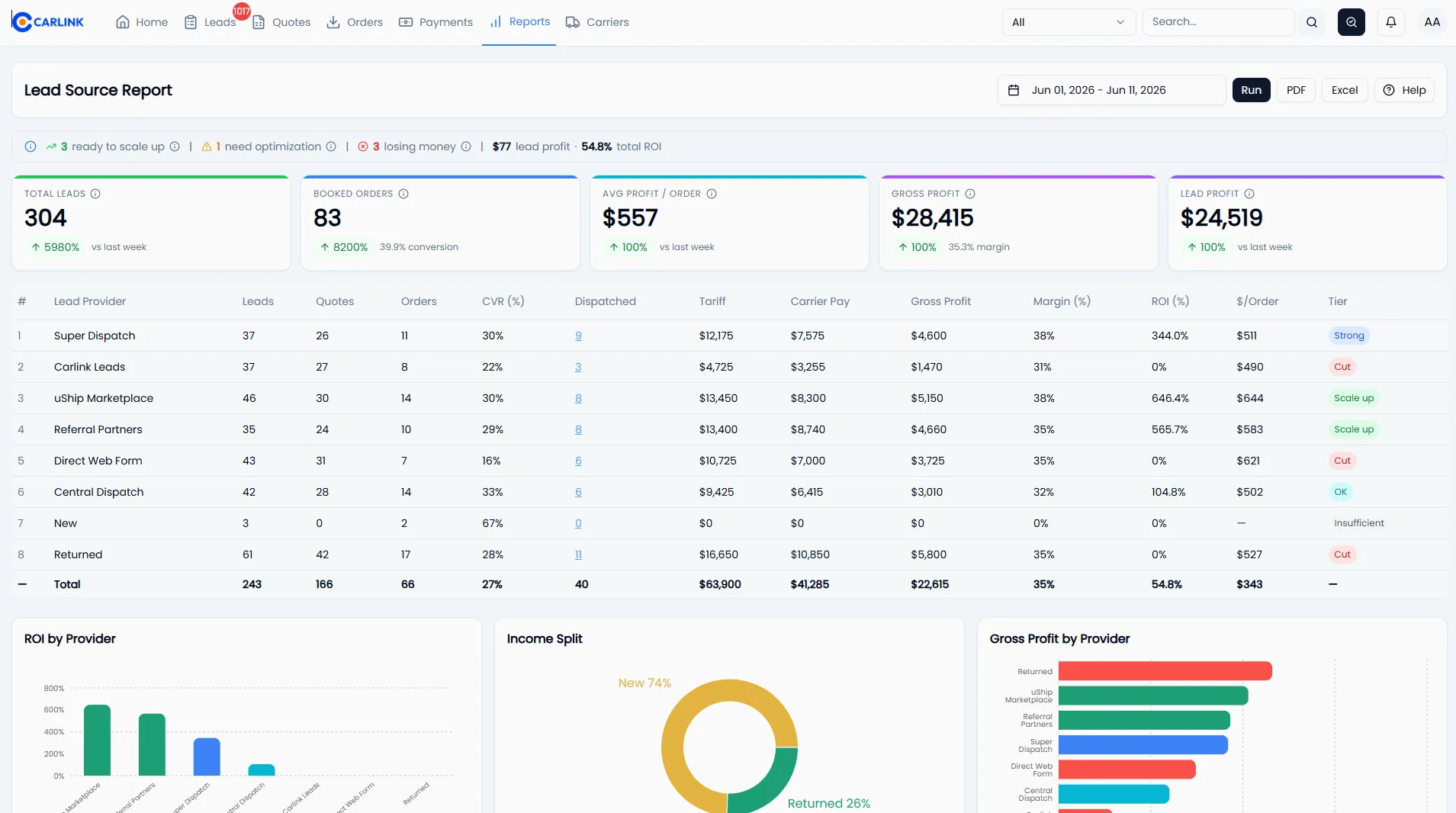
01A spreadsheet can hold a list of leads. It can't tell you which source actually paid back, route a lead to the right agent, or follow up on its own. So follow-ups slip, leads land on the wrong person, and you keep buying from sources that never close.
- No source-level ROI — you re-up lead spend on gut feel
- Follow-ups depend on someone remembering to check a tab
- Two agents call the same lead; one customer, two impressions of chaos
- No speed-to-lead — by the time you quote, they've booked elsewhere
Quoting
02Manual quoting means manual math. Agents leave money on the table on easy lanes and quote below cost on hard ones — and you only find out at month-end, if at all.
- Inconsistent margins agent-to-agent on the same lane
- Slow quotes lose deals to whoever replied first
- No margin floor — under-priced orders ship without a warning
- No lane history baseline — every quote is a fresh guess
Dispatch
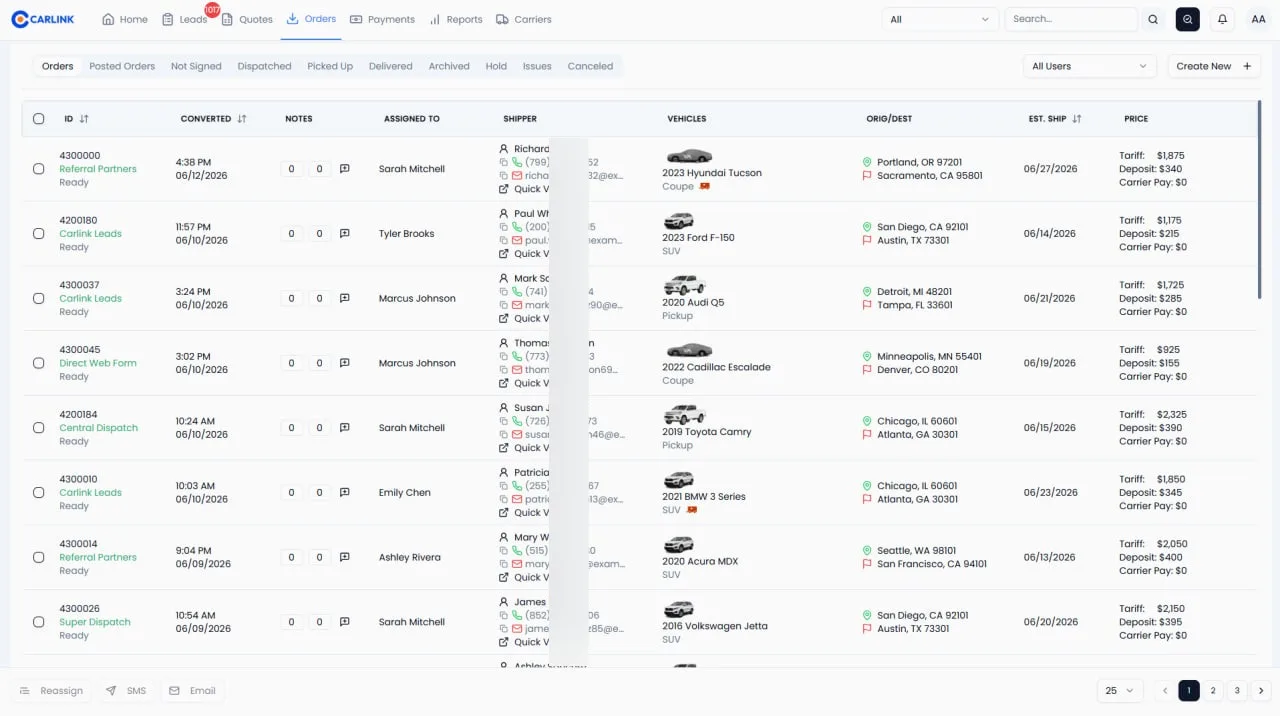
03Dispatch lives in three places at once: a loadboard, a notes app, and a spreadsheet that's always one step behind reality. Statuses go stale and the same load gets promised twice.
- The sheet says 'dispatched'; the load was actually cancelled an hour ago
- Double-bookings because nothing un-posts automatically
- Carrier details copy-pasted between four tools, error by error
- No real-time status — the customer knows more than your sheet does
Invoicing & payments
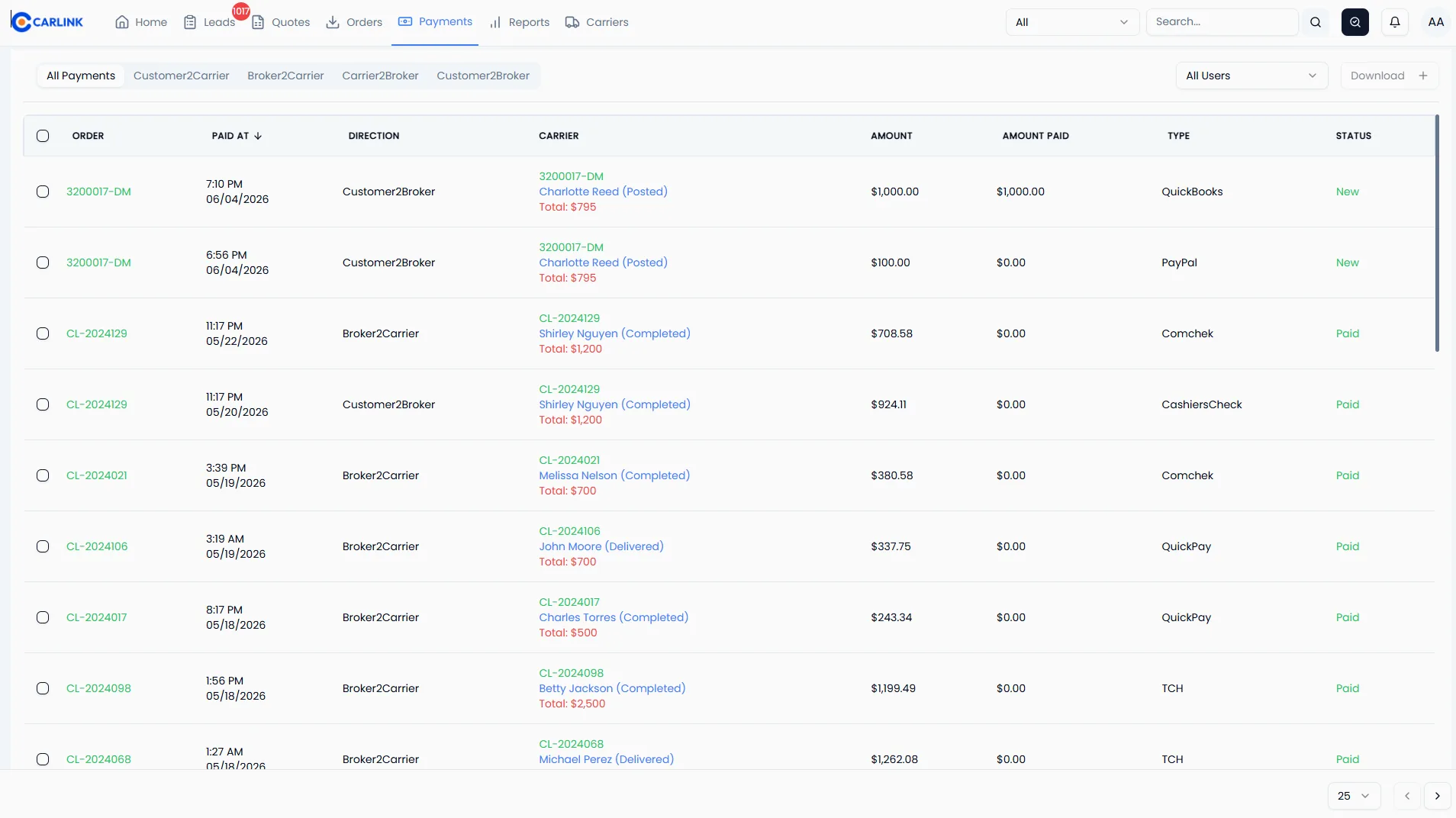
04Customer payments, carrier payments, agent commissions, and lead expenses live in separate tabs that never reconcile cleanly. Money goes missing between systems and month-end takes a week.
- Manual reconciliation against QuickBooks — every single month
- Carrier payments missed or late because nothing queues them
- Commission math done by hand, disputed by agents
- No live P&L — you find out last month was bad, this month
Reporting
05To answer 'was last month good?' you stitch together eight tabs by hand. By the time the picture is clear, the leads that killed your margin are long gone.
- Decisions made on stale, manually-assembled numbers
- No per-agent or per-source profitability without hours of work
- Every report is a rebuild, not a refresh
- Owners fly blind between month-end closes
Access & security
06A shared spreadsheet has no real permissions and no audit trail. Everyone sees everything, and when an agent leaves, your customer and carrier data leaves with them.
- No role-based access — agents see commissions, payments, everything
- No audit log — you can't tell who changed or exported what
- One shared link = your whole book of business, one screenshot away
- No 2FA on a Google Sheet full of customer PII
What it looks like in one place
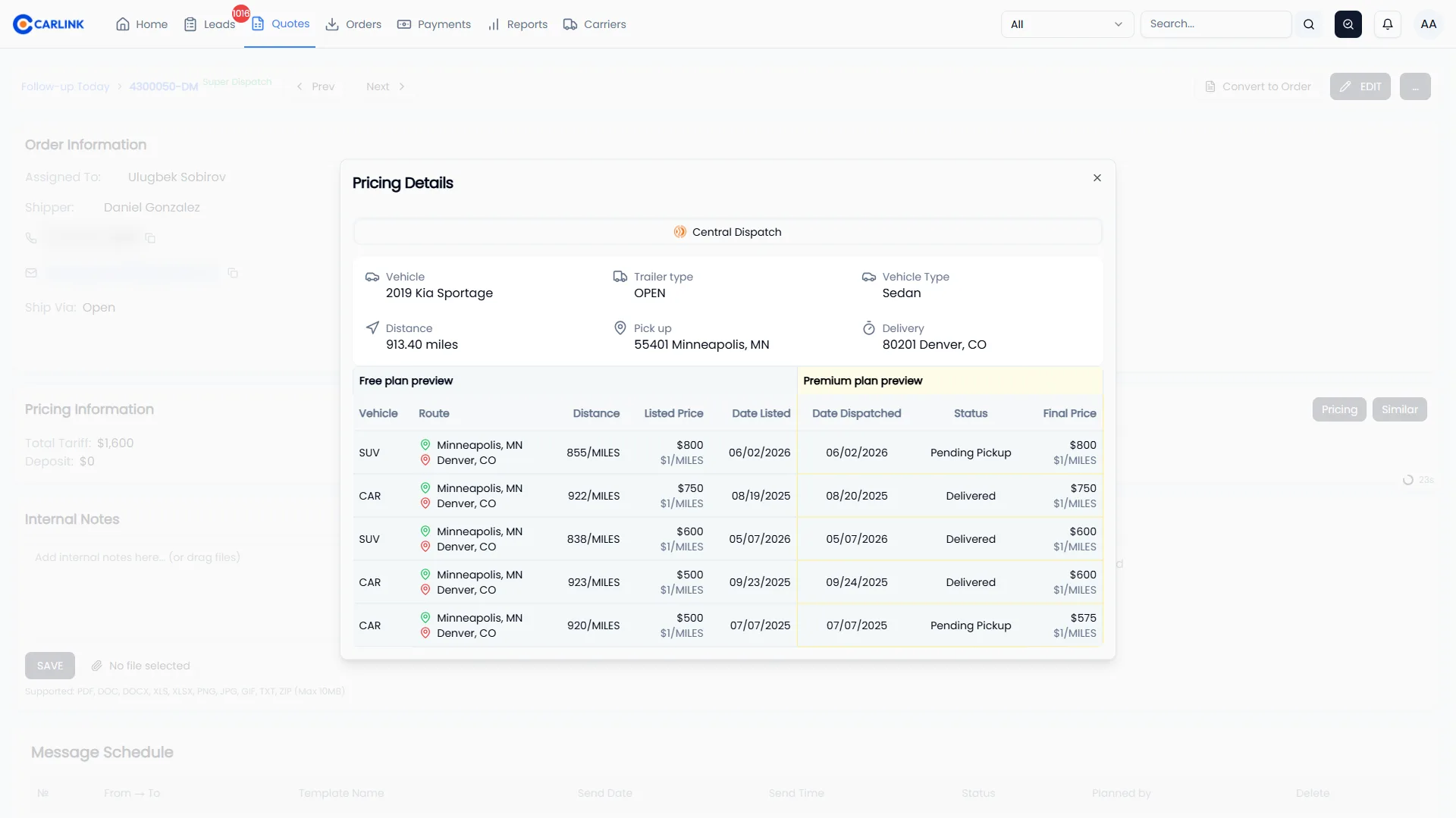
The same work a spreadsheet scatters across tabs — leads, orders, and payments — running live in Carlink, on real data.
It compounds as you scale
With three agents, a spreadsheet is annoying. With ten, it's a liability. Each new agent multiplies the copy-paste, the version conflicts, the "which tab is current?" questions, and the silent leaks nobody catches until the numbers don't add up.
| What it costs you | On a spreadsheet | On Carlink |
|---|---|---|
| Follow up a lead | If someone remembers | Automated |
| Quote a customer | Minutes, by hand | Under 60 seconds |
| Know your best lead source | Hours of stitching | Live, always |
| Prevent a double-booking | Hope | Auto-unpost |
| Pay a carrier on time | Manual check run | Scheduled ACH |
| Close the month | About a week | Already done |
When a spreadsheet is genuinely fine
We're not going to pretend everyone needs software tomorrow. If you're a solo operator running a handful of loads a month, a spreadsheet is the right call — the overhead of a system isn't worth it yet.
The signal to switch isn't a load count — it's the moment a second person touches a deal. That's when you need process, permissions, and a single source of truth. Watch for these signs:
- You've added agents and nobody's sure which tab is current
- You can't say which lead source was profitable last month without a half-day of work
- A load got promised to two carriers, or a carrier got paid late
- An agent left and you worried about what they could see or take
- Month-end close eats days you don't have
If two or more of those sound familiar, the spreadsheet is already costing you more than software would.
One platform, not six tabs
Carlink is built specifically for auto-transport brokerages. It runs the full cycle — from the first inbound lead, through auto-quoting and dispatch, to invoicing and live reporting — in one place, with real permissions and an audit trail. It's proven in real operations by brokers moving $48.9M+ in freight.
And the switch is easier than staying
- Migration takes one day — our team imports your leads, orders, carriers, and customers and cross-checks the totals against your sheets
- No long-term contract; export your data to CSV anytime — you own it
Frequently asked questions
Get off the spreadsheet
See your whole brokerage in one place. Migration takes a day — we handle it.
More from the Carlink blog

Best Auto Transport Software for Brokers (2026 Buyer's Guide)
Choosing auto transport software? A practical buyer's guide: loadboard vs CRM vs an all-in-one brokerage platform, the six must-have features to look for, how to run a demo that tells the truth, and what it should cost.
How to Price Auto Transport Loads (Without Losing Margin)
Your quote has to win the customer and still pay the carrier. What moves carrier rates, how to quote from lane history, how to set a margin floor, and how to stop giving away margin on every booking.
How to Get More Auto Transport Leads (Without Burning Your Budget)
Most brokers don't have a lead problem — they have a conversion problem. Where the best auto transport leads come from, why the first quote wins, how to track ROI per source, and how to book more of the leads you already pay for.