
What is an auto
transport broker?
An auto transport broker connects people who need a vehicle moved with the carriers who actually move it, without owning a single truck. This post covers what that means, how brokers make money, and what it takes to run one.
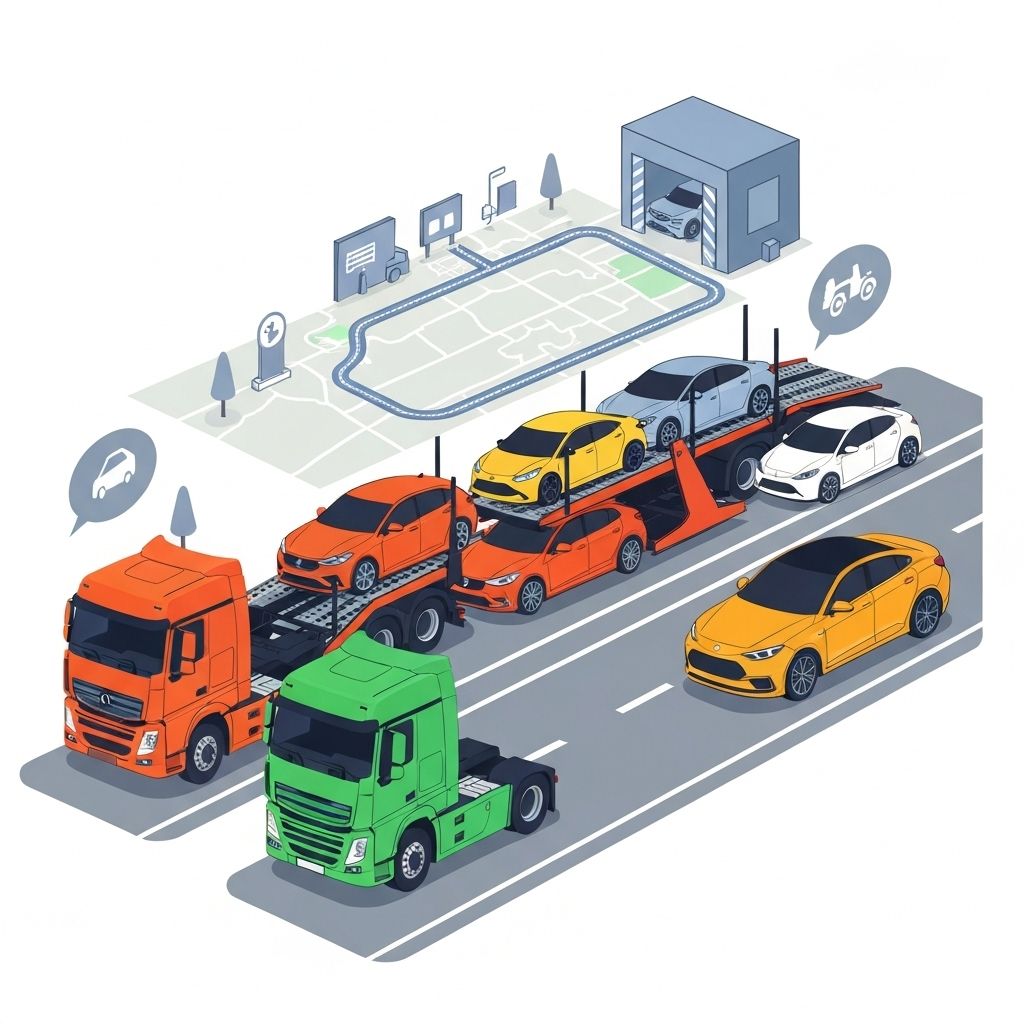
A broker arranges the move
An auto transport broker is the middle layer of the car-shipping industry. When someone needs a vehicle moved across the country, the broker is who they call. The broker prices the move, books the order, and then finds a licensed carrier to physically haul the car.
The key thing to understand: a broker doesn't own trucks and never touches the vehicle. Their product is coordination. They match demand (customers) to supply (carriers) and handle the pricing, paperwork, and problems in between. It's closer to a travel agent or an insurance broker than to a trucking company.
That coordination is real work, and it's why most customers book through brokers: a single broker has relationships across hundreds of carriers and can fill a route in hours, where a customer calling carriers directly might spend days and still come up empty.
The difference that confuses everyone
"Broker" and "carrier" get used interchangeably, but they're two different businesses. The split is simple.
| Broker | Carrier | |
|---|---|---|
| Owns trucks | No, arranges transport | Yes, owns and drives them |
| Touches the vehicle | Never | Loads, hauls, delivers |
| How they earn | Margin between customer and carrier | The haul fee they're paid |
| Main skill | Sales, pricing, carrier relationships | Driving, routing, capacity |
| Federal authority | Broker MC number + $75k bond | Carrier MC + USDOT + insurance |
| Customer-facing | Yes, the customer's main contact | Usually only at pickup/delivery |
It's all in the margin
Brokers make money on the spread between what the customer pays and what the carrier accepts. The customer sees one all-in price. Behind it, the broker has negotiated a lower number with a carrier. The difference is the broker's gross margin.
- Customer pays (all-in quote)
- $1,000
- Carrier accepts to haul it
- −$800
- Broker gross margin
- $200
Out of that $200, the broker still pays for the lead, the agent's commission, and overhead. Net margin per load is thin, which is why volume and clean operations matter so much.
So the job comes down to three things: book more loads, protect the margin on each one, and keep the cost of getting them (leads, cancellations, disputes, late carrier payments) as low as possible. A broker who knows their true cost per acquisition and their margin per lane has a real edge over one working blind.
From lead to payment, step by step
Every booked move runs the same six stages. This is the day-to-day of a working brokerage.
Lead
01A customer asks for a quote. It comes in through a lead provider, a Google ad, a dealer, or a referral. The broker writes down the vehicle, the route, the dates, and whether it runs or not.
- Most brokers buy leads from providers and compete on how fast they quote
- The first credible quote usually wins the booking
- Source quality varies a lot, so tracking ROI per source is what separates the winners
Quote
02The broker prices the move: what the customer pays, minus what a carrier will accept to haul it, equals the broker's margin. Good pricing reflects the lane, the season, the vehicle, and current carrier supply.
- Price too high and you lose the deal; too low and no carrier takes the load
- Lane history and live carrier rates turn a guess into a real number
- The customer only ever sees one number; the carrier pay stays behind it
Order
03The customer agrees, the broker books the order, collects a deposit or sets payment terms, and the move becomes a live job that needs a carrier assigned to it.
- Deposit now, balance on delivery (often COD to the driver) is the common model
- A signed order and clear terms protect the broker if anything goes wrong
- This is where a clean record of who owes what starts to matter
Dispatch
04The broker posts the load to a loadboard (Central Dispatch, Super Dispatch), negotiates with carriers, and dispatches the one that fits the timeline and price. A dispatch sheet goes to the driver.
- Loadboards are where supply meets demand for the actual haul
- Vetting the carrier's MC number, insurance, and reviews protects the customer
- A load promised to two carriers is the fastest way to lose both
Delivery
05The carrier picks up, the vehicle moves, and the customer wants status the whole way. On delivery, both parties sign the Bill of Lading and the driver typically collects the balance.
- Status-check calls are the #1 time sink if customers can't see progress themselves
- The Bill of Lading is the record of condition at pickup and delivery
- Smooth delivery is what turns a one-time customer into a repeat one
Payment
06The customer's balance clears, the carrier gets paid, the agent earns commission, and the broker's margin is what's left. Do this hundreds of times a month and the spread becomes the business.
- Carrier pay, customer payments, and commissions all have to reconcile
- Margin per load is small; volume and clean operations are where profit lives
- Knowing your real cost per acquisition tells you which leads were worth buying
What it takes to operate legally
Becoming a broker is mostly paperwork and a bond, not trucks. To run a legitimate U.S. auto transport brokerage you need:
- A broker MC number (motor carrier operating authority) from the FMCSA
- A $75,000 BMC-84 surety bond or trust fund agreement
- A registered process agent (BOC-3 filing) in every state you operate
- A USDOT number for registration and identification
- Business basics: an entity, an EIN, and a business bank account
The bond is the main upfront cost, and operating without authority is illegal. Once you're licensed, the thing that actually decides whether you make money is your operation: how fast you quote, how well you price, and how cleanly you run the back office.
The brokerage is the software
Since a broker owns no trucks, the brokerage is its process: leads in, quotes out, loads dispatched, payments reconciled. Most brokers stitch that together from a loadboard, a CRM or spreadsheet, QuickBooks, and a phone, and they lose margin in the gaps between them.
Carlink is built specifically for auto transport brokerages and runs the whole cycle in one place, from the first lead, through quoting and dispatch, to invoicing and live reporting. A brokerage running on it knows its numbers instead of guessing at them.
Frequently asked questions
Run your brokerage like the top 1%
One platform for the whole cycle: leads, quoting, dispatch, and payments. Migration takes a day, and we handle it.
More from the Carlink blog
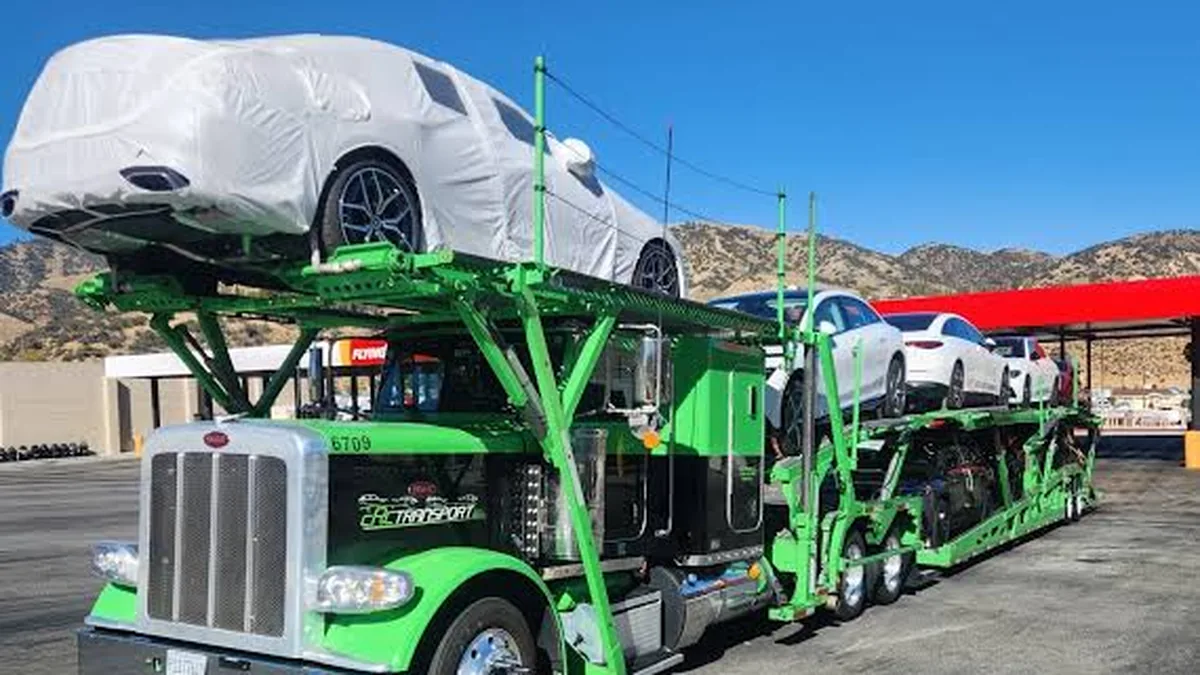
How Much Do Auto Transport Brokers Make?
What auto transport brokers really earn: broker income is margin per load times loads booked, minus cost. Real per-load margins, monthly income scenarios from solo broker to growing brokerage, and the levers that decide your take-home.
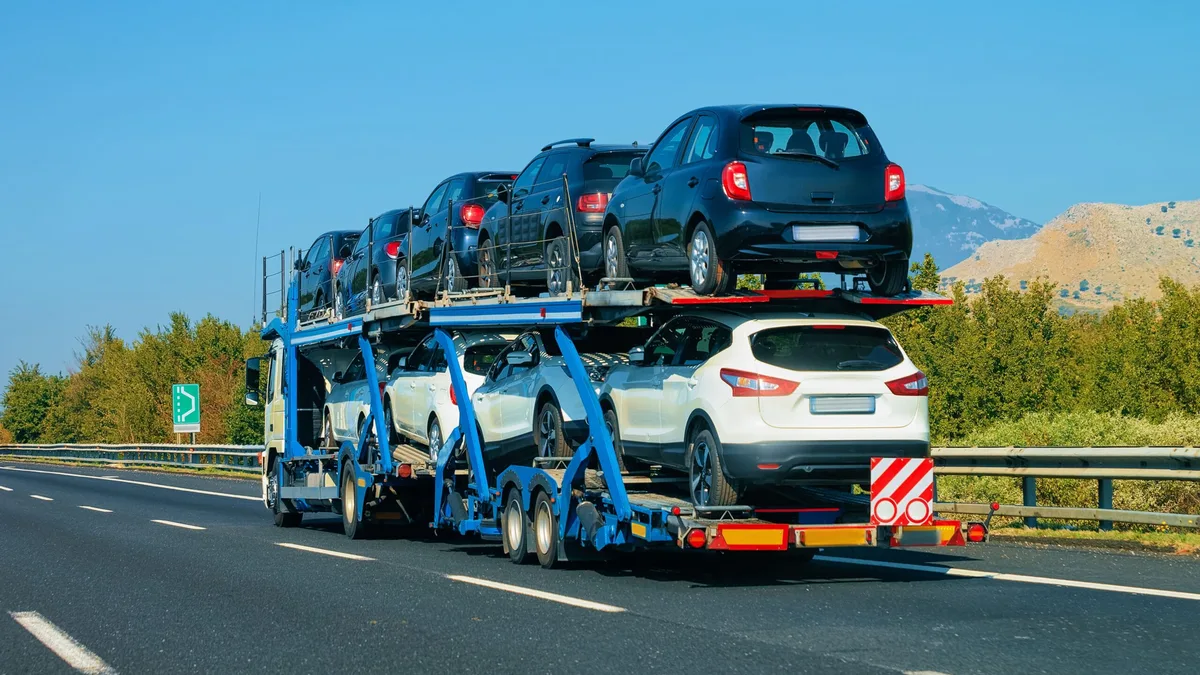
How to Start an Auto Transport Brokerage (2026 Step-by-Step Guide)
How to start an auto transport brokerage: get your FMCSA broker authority (MC number), the $75,000 surety bond, BOC-3 and UCR filings, what it really costs to start, and how to book your first loads and keep margin.
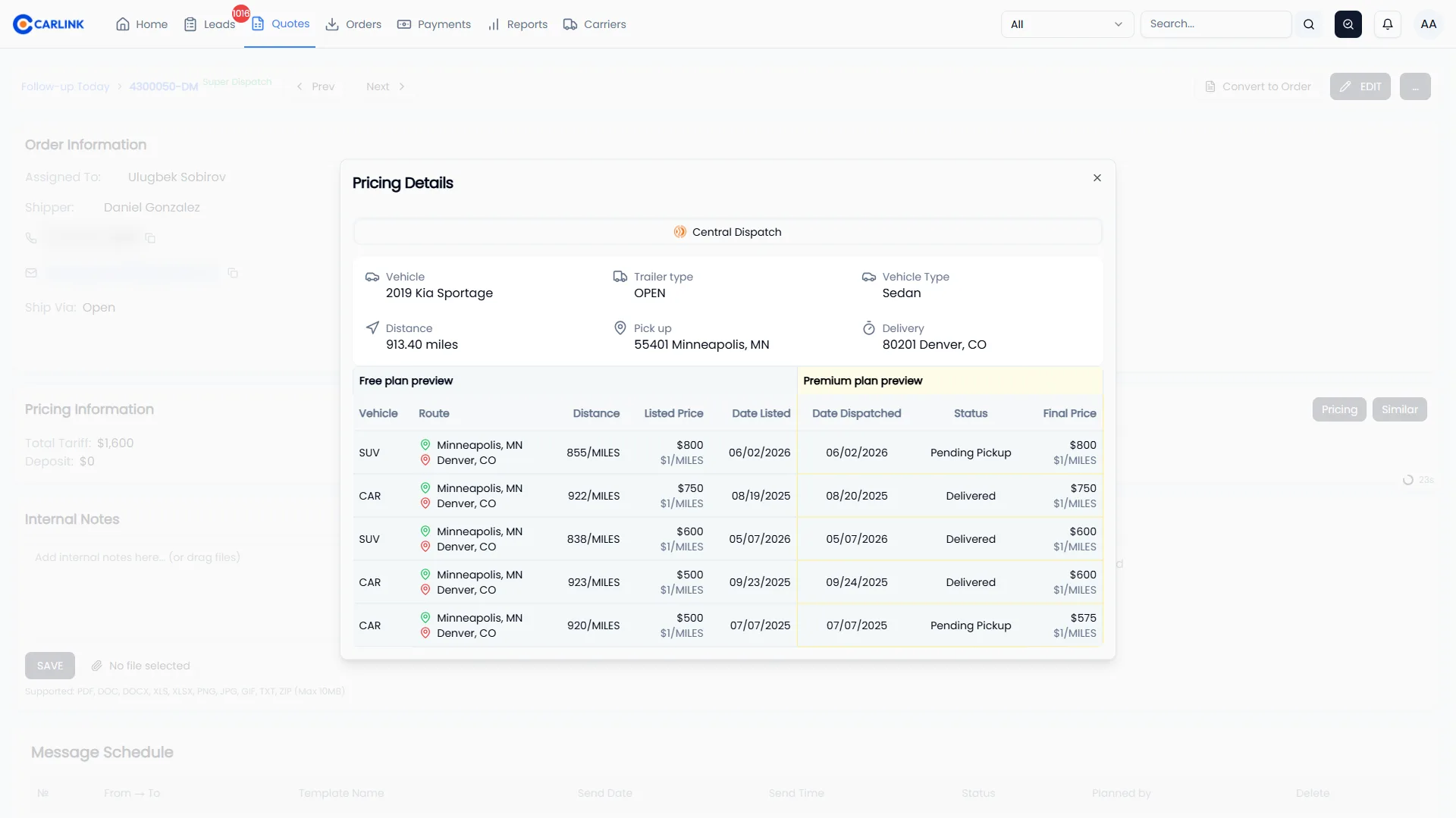
How to Price Auto Transport Loads (Without Losing Margin)
Your quote has to win the customer and still pay the carrier. What moves carrier rates, how to quote from lane history, how to set a margin floor, and how to stop giving away margin on every booking.