
How Much Do
Auto Transport Brokers Make?
Auto transport brokers don't earn a salary — they earn the margin between what the customer pays and what the carrier gets. That makes income a simple formula with a few honest variables. Here is what brokers actually make, the per-load math behind it, and the levers that decide your take-home.
Income = margin per load × loads booked − cost
A broker earns the spread between the customer's price and the carrier's pay. On a standard open-carrier move that spread is commonly $100–$300 per vehicle. No single load makes you rich; income is built from many loads, each carrying a modest margin, minus what you spend to source and service them.
So the real questions aren't "how much per load" — they're how many loads you book, how much margin you hold on each, and how much it costs you to book them. Three levers, one formula. The rest of this page breaks down each one, with illustrative monthly numbers you can plan around.
Not sure how a broker makes money in the first place? Start with what an auto transport broker actually does.
What actually decides your income
Every dollar a broker takes home traces back to these four. Margin and volume set the ceiling, conversion multiplies both, and cost decides how much of the gross you actually keep.
Margin per load — the spread you hold
A broker's pay is the difference between what the customer pays and what the carrier gets. On a standard open-carrier move that spread is commonly $100–$300 per vehicle; enclosed, inoperable, oversized, or exotic loads can carry more. The number you keep depends on quoting from real lane data, not guessing, so you win the booking without giving margin away.
- Standard open loads: roughly $100–$300 gross margin per vehicle
- Specialty (enclosed, inop, exotic, expedited) can hold more
- Quote too low and you book at no profit; too high and you lose the load
Volume — how many loads you actually book
Income is margin times volume, and volume is the number most new brokers overestimate. A part-time broker moves a handful of loads a week; an established solo broker runs dozens a month; a brokerage with a sales floor runs hundreds. Volume comes from a steady lead flow and the discipline to follow up on every one.
- Part-time / ramping: a few loads per week
- Established solo broker: roughly 40–80 loads per month
- Growing brokerage with agents: several hundred a month
Conversion — the leads you turn into loads
You pay for leads whether or not they book, so your real income lever is conversion. The broker who quotes first and follows up wins loads their competitors already paid for. Moving conversion from, say, one in ten to one in six on the same lead spend can do more for take-home than any rate increase.
- Speed to first quote is the single biggest factor in who books
- Track ROI per lead source and cut what doesn't convert
- Follow-up on aging quotes recovers loads you already paid to source
Costs — what comes out before take-home
Gross margin is not take-home. Out of the spread come your lead spend, loadboard and software subscriptions, your surety bond premium, and taxes — plus agent commissions or payroll once you hire. Brokers who can't see their true cost per booked load mistake a busy month for a profitable one.
- Recurring: leads, loadboards, software, bond premium, UCR
- As you scale: agent commissions or payroll
- Net margin, not gross, is what you actually take home
What the monthly math looks like
These are illustrative scenarios to plan around, not guarantees. They show gross margin — the spread before you subtract lead spend, software, the bond premium, taxes, and any agent commissions. Your actual numbers depend on your lanes, niche, lead quality, and conversion.
| Stage | Loads | Avg margin | Gross margin / mo | Notes |
|---|---|---|---|---|
| Part-time / ramping | 10–20 / mo | ~$150 | $1,500–$3,000 / mo | First few months while you build lead flow and learn to quote. |
| Established solo broker | 40–80 / mo | ~$175 | $7,000–$14,000 / mo | One experienced broker running a steady book of loads. |
| Growing brokerage (with agents) | 150–300+ / mo | ~$175 | $26,000–$50,000+ / mo | Before agent commissions and payroll — team gross, not owner take-home. |
The jump between rows isn't luck — it's volume and conversion. Doubling booked loads on the same margin doubles the gross, and lifting conversion does it without spending a dollar more on leads. That's why the brokers who grow obsess over their numbers, not their rate sheet.
You only earn the margin you can actually see
The gap between gross and take-home is where most broker income quietly disappears: a quote sent too low, a lead that went cold before follow-up, a carrier payment that ate the spread, a lead source you kept funding that never booked. None of those show up until you can see margin per load and ROI per source in one place.
Carlink quotes from lane pricing so you hold margin on every load, tracks each order's deposit, balance, and carrier pay so the spread doesn't leak, and reports booked revenue and margin by lead source so you know which spend actually earns. That's the difference between a busy month and a profitable one.
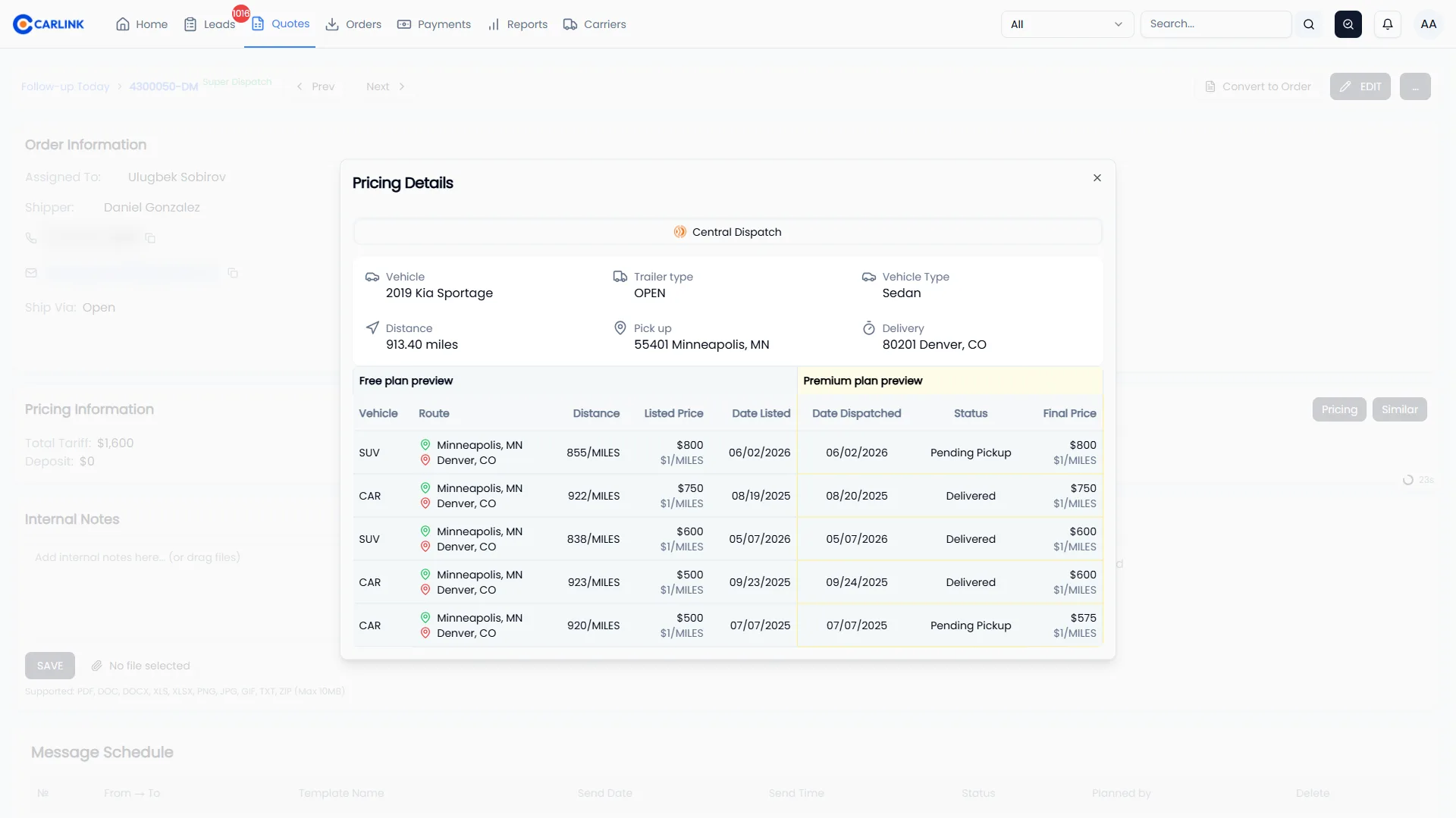
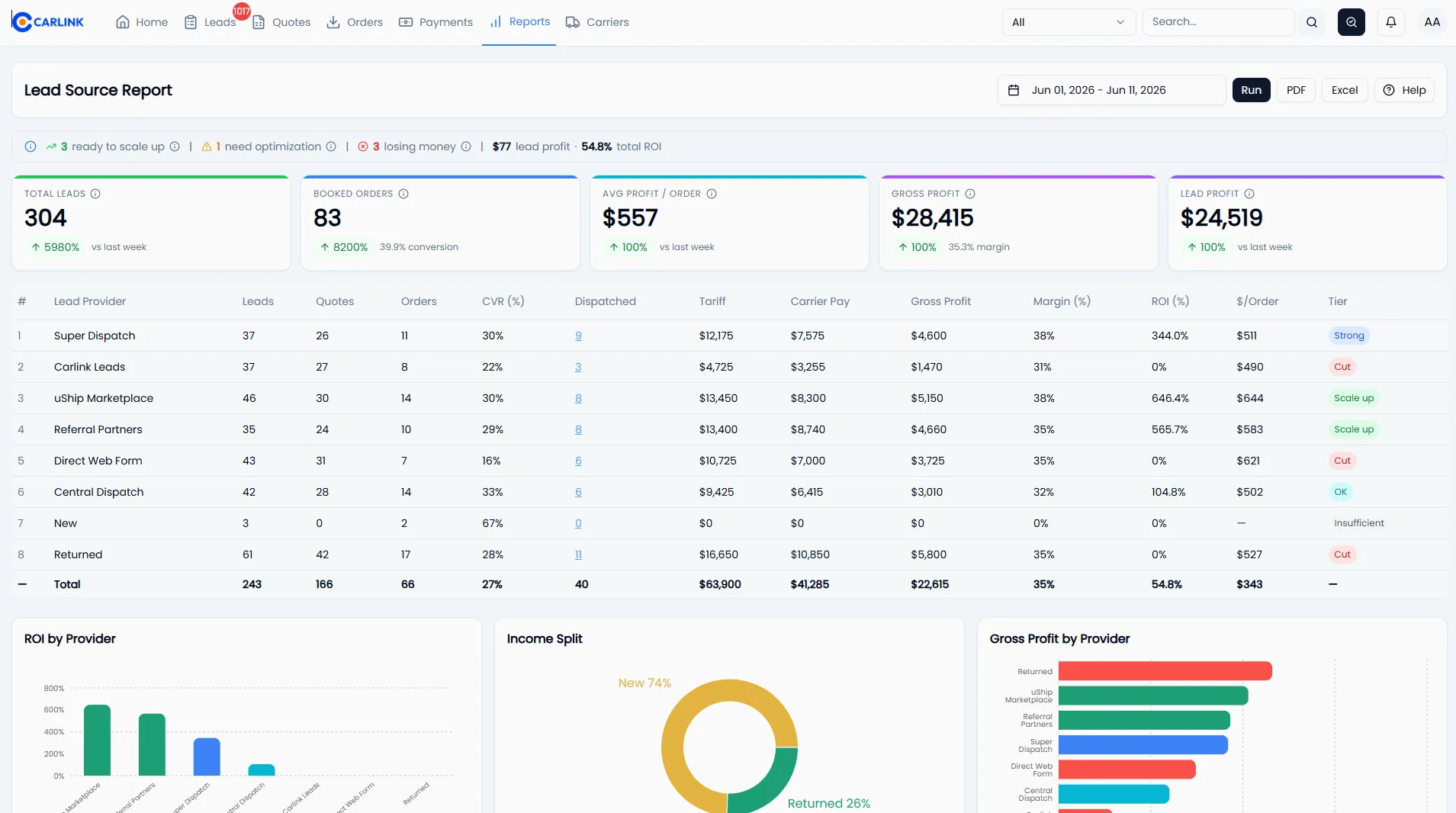
- Hold margin on every quote — price from lane data so you win the load without giving away the spread.Pricing Automation →
- Convert more of the leads you pay for — capture every lead and quote first, so fewer paid leads go cold.Lead Management →
- See margin and ROI, not just activity — booked revenue and margin by lead source, so you fund what earns.Reports →
Ready to build the income, not just the authority? See how to start an auto transport brokerage , then how to price loads without losing margin.
Frequently asked questions
The dollar figures here are illustrative industry ranges to plan around, not guarantees of income. Actual earnings vary widely by lane, niche, lead quality, conversion, and how the business is run.
Earn the margin, don't leak it
Carlink shows margin on every quote, keeps customer and carrier money on the same order, and reports booked revenue by lead source — so you can see exactly what you make and where it comes from. Book a demo and see the numbers that decide your income.
More from the Carlink blog
What Is an Auto Transport Broker? (And How They Actually Make Money)
A plain-English guide to what an auto transport broker is, how brokers differ from carriers, how they make money on the margin between customer and carrier, and what it takes to operate one legally.

How to Start an Auto Transport Brokerage (2026 Step-by-Step Guide)
How to start an auto transport brokerage: get your FMCSA broker authority (MC number), the $75,000 surety bond, BOC-3 and UCR filings, what it really costs to start, and how to book your first loads and keep margin.
How to Price Auto Transport Loads (Without Losing Margin)
Your quote has to win the customer and still pay the carrier. What moves carrier rates, how to quote from lane history, how to set a margin floor, and how to stop giving away margin on every booking.